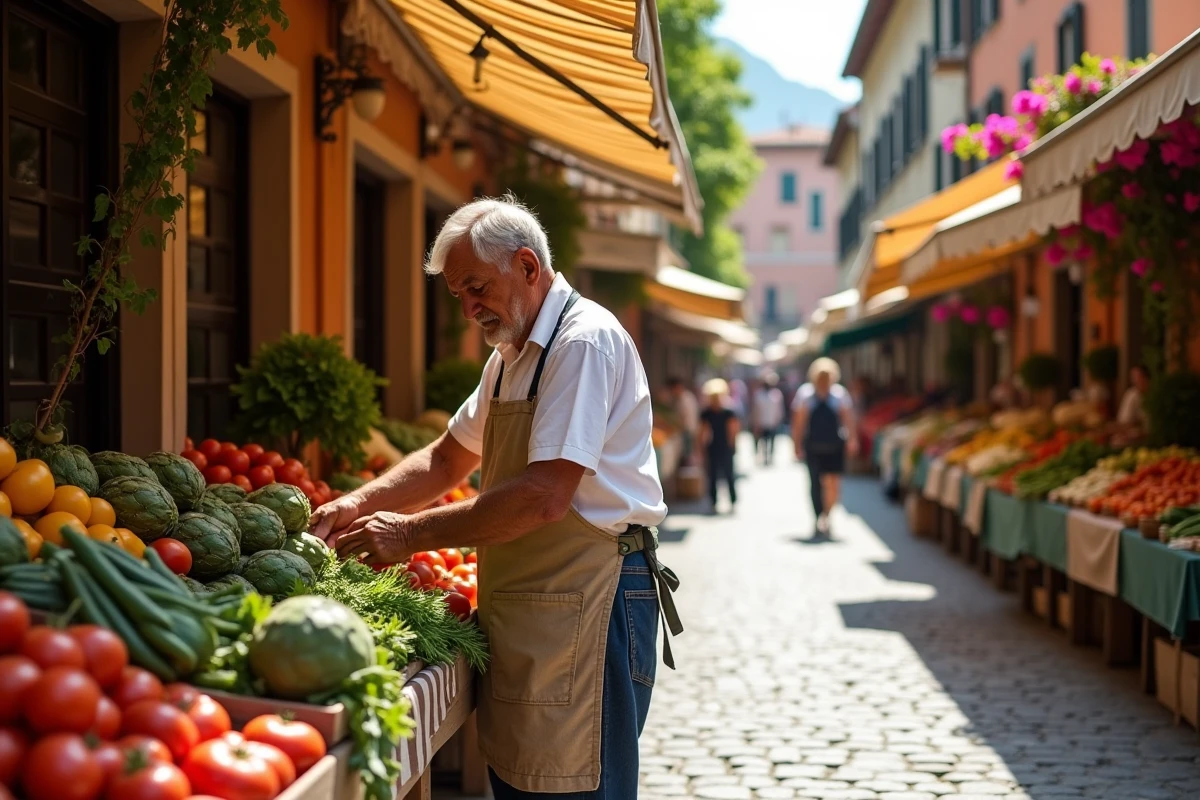
The Bordighera market is a weekly market held every Thursday morning in this small town on the Ligurian Riviera, just a few kilometers from the French border. It brings together local producers and artisans around typical food, textile, and craft products of Liguria.
Ligurian products at the Bordighera market: what distinguishes the stalls
Liguria produces goods that are hard to find with the same quality on the other side of the border. The Bordighera market concentrates this offer on a few dozen stalls, making it easy to compare producers with one another.
Extra virgin olive oil from Liguria is the flagship product. The taggiasca variety, grown on the hills around Bordighera, yields a mild, slightly bitter oil, recognizable by its light fruitiness. Several producers sell it directly, sometimes in bulk, which lowers the price compared to tourist shops in the city center.
Aged cheeses and artisanal cured meats hold an important place at the stalls. Seasonal fruits and vegetables from nearby Ligurian lands, often picked the day before, can also be found. For those looking for reviews of the Bordighera market before visiting, the consistency of food quality is a recurring point.
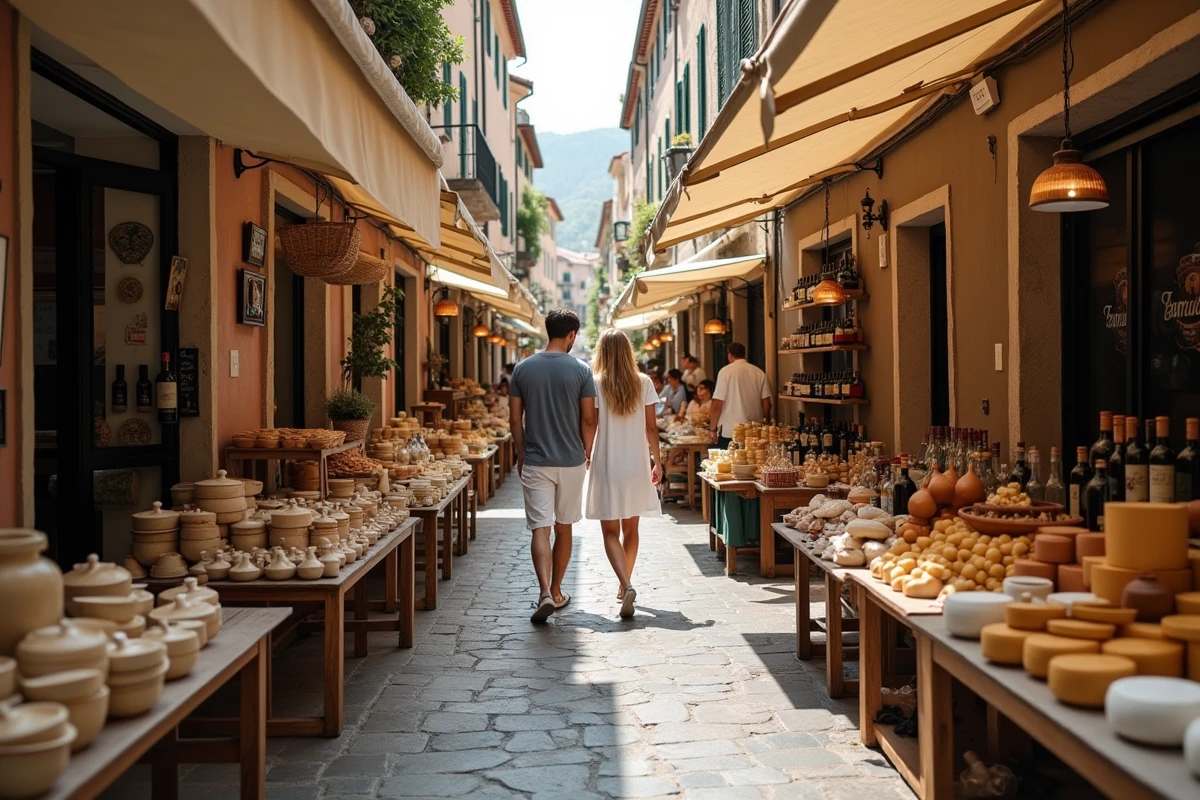
Local crafts complete the offer: pottery, textiles, olive wood objects. These stalls are fewer than the food ones, but they reflect a regional know-how that is not found at larger markets like that of Ventimiglia.
Bordighera or Ventimiglia: which Ligurian market to choose
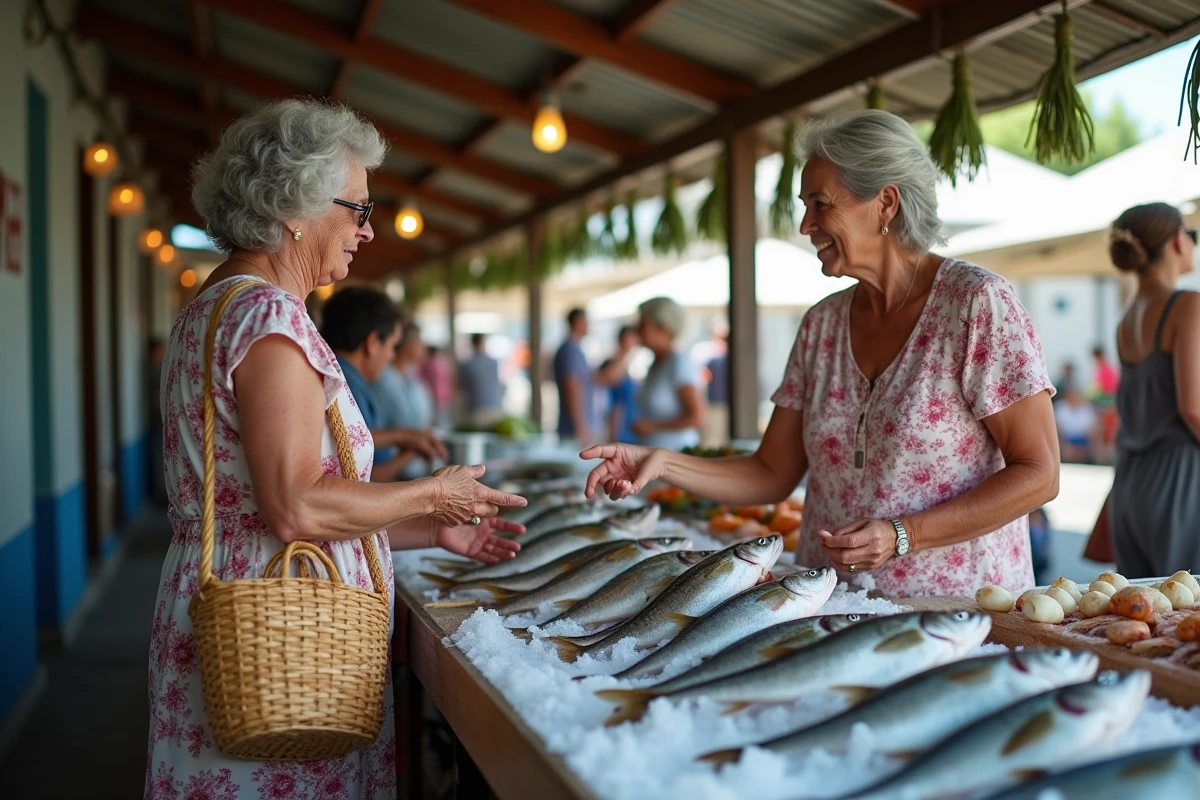
The comparison with the Ventimiglia market is consistently brought up by visitors arriving from the Côte d’Azur. The two towns are just a few minutes apart by car, and their markets target a partly similar audience.
The Ventimiglia market is much larger and more crowded. It attracts entire buses of tourists, which changes the nature of the offer: more non-local vendors, imported products presented as regional, a more commercial atmosphere. The volume of visitors makes strolling between the stalls less fluid, especially in high season.
Bordighera operates on a different scale. The number of stalls remains modest, as does the attendance. This smaller size has a direct consequence on the composition of the vendors: the proportion of local producers is higher than in Ventimiglia. Engaging in dialogue with merchants is easier, tastings are frequent, and the pace of visiting remains relaxed even on a Thursday in the middle of summer.
Parking illustrates this difference in scale well. In Ventimiglia, finding a spot is a challenging task on market days. In Bordighera, parking remains accessible without particular difficulty, even when arriving mid-morning.
Hours and season: when to visit the Bordighera market
The market takes place on Thursday mornings. The first stalls set up early, and activity is in full swing by mid-morning. Arriving before noon allows time to explore all the stalls without rushing.
The offer varies by season. In summer, Mediterranean fruits dominate the food stalls, and the number of visitors increases with the tourist flow. Outside of high season, the atmosphere changes: fewer people, more locals among the buyers, and winter products like citrus fruits or fresh olives.
Here are a few points to check before planning a visit:
- Italian public holidays may lead to the cancellation of the market without prior notice. The calendar of national and local holidays in Liguria does not coincide with that of France.
- In low season, some producers reduce their presence or come only every other week. The offer remains decent but less varied than between May and September.
- The weather directly influences the number of stalls set up. A rainy Thursday may see half of the outdoor vendors disappear.
Bordighera beyond the market: extending the visit in the city
The market occupies part of the morning. The rest of the day lends itself to discovering Bordighera itself, a town whose atmosphere contrasts with the more touristy seaside resorts along the coast.
The Lungomare Argentina promenade runs along the waterfront, lined with palm trees that recall the city’s botanical past. Bordighera has long supplied palms to the Vatican, a historical link still visible in the omnipresent vegetation in the center.
The upper district, Bordighera Alta, forms a perched medieval village with narrow streets and an unobstructed view of the sea. Access is on foot from the center in just a few minutes. The Sant’Ampelio church, located on a rocky promontory by the sea, offers another remarkable viewpoint of the Ligurian coast.
For garden enthusiasts, the Pallanca exotic botanical gardens gather a collection of succulent and tropical plants across several terraces. The visit takes about an hour and nicely complements a morning spent at the market.
Bordighera serves as a coherent stop for a day: the market in the morning, the promenade and the old town in the afternoon, a meal in one of the restaurants in the center that cook the same products as those bought at the stalls. It is this continuity between the market and the town that gives the visit its coherence, far from the markets disconnected from the urban fabric found in large tourist resorts.