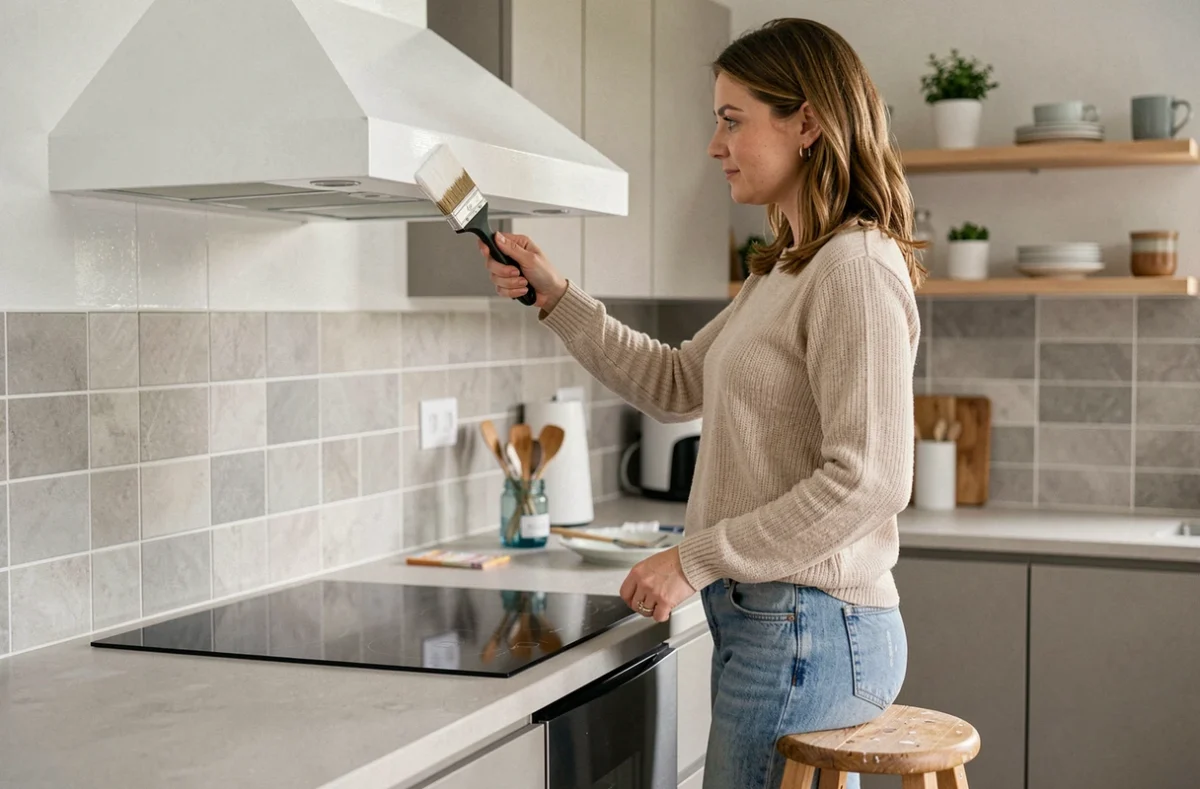
The embellishment of a kitchen hood requires meticulous preparation, where every detail counts. Thorough degreasing of the surface is imperative, followed by sanding for optimal paint adhesion. The selection of paint must be rigorous, favoring products that are heat and grease resistant. The application demands clockmaker precision, often in multiple coats, for a smooth and impeccable finish. The secret to a successful and durable makeover also lies in adding a final protective layer. Precise gestures, adapted know-how, and angelic patience are the keys to this transformation.
Meticulous preparation of the hood before embellishment
When considering a makeover for your hood, know that a rigorous preparation is necessary to achieve an optimal result. A poorly prepared hood can lead to not only aesthetic issues but also functional problems.
The first step is to disassemble the hood to remove all parts that do not need to be repainted or modified. This process must be carried out with care and precision to avoid any breakage or loss of essential parts. Furthermore, it is also important to thoroughly clean the inside and outside of the hood before undertaking any modifications. A good degreasing is essential to eliminate all the dirt accumulated over time.
Once the hood is clean and ready to be revamped, you will need to choose the appropriate materials for this task. Zinc presents itself as an excellent option due to its interesting properties: scratch-resistant and easily malleable, this material will add a very trendy industrial touch to your kitchen.
By integrating this anchor with zinc, you will certainly add a unique character to your appliance while ensuring its durability over time. This is why this material is often recommended when it comes to transforming an old hood into a modern and stylish element.
To correctly apply zinc to the external surface of the hood, ensure that it is perfectly flat before starting to achieve a perfect finish.
Careful selection and application of suitable paint
In the world of decoration and renovation, choosing the right paint is a crucial step. The variety of types of paint available on the market can sometimes make this task daunting for non-experts. There are indeed a multitude of options, ranging from oil-based paints to acrylics, as well as enamels and varnishes.
The precise use, depending on whether you plan to repaint an interior wall, a floor, an outdoor fence, or any other type of surface, is important in your choice. The specific characteristics of each material must also be taken into account as they directly influence the final appearance of the applied product. Certain paints are more suitable for materials like wood, while others are preferably used on metal or concrete.
Decoding the labels often proves essential to understand exactly what each contains and thus make an informed choice. They provide information about the chemical composition of the product (whether it is water-based or solvent-based), its environmental performance (if it carries an eco-label), and its level of indoor air emissions.
As important as it is, carefully choosing your paint is not enough: you also need to know how to apply it well! Preparatory work is essential: after thoroughly cleaning your surface with an appropriate product, remember to apply a primer.
Additional tips for a successful and durable hood makeover
Renewing the look of your hood is an undertaking that requires prior thought and precise know-how. That’s why we offer you here some tips for achieving a durable makeover of your equipment.
Choose the right materials: The first step is to choose the covering that will give your hood its new appearance. The choice should be made based on the characteristics of the appliance, but also on the style you wish to achieve. The possibilities are numerous: special paint, adhesive film, stickers… Just make sure that the chosen material withstands the conditions of use of the hood (heat, humidity).
Carefully prepare the surface: Before applying anything to your hood, it is essential to carefully prepare its surface. Indeed, the slightest residue can prevent the adhesion of the products used for its makeover and cause their premature peeling. Thorough cleaning followed by complete degreasing is therefore essential.
Consider technical specifics: Once the appropriate decorative solutions are chosen and the concerned surface is well prepared, do not forget that there are certain technical constraints related to the type or model of your hood, such as its geometric shapes or integrated lighting systems, which must be taken into account during the process to avoid any unforeseen damage.