The Pilates ball (or Swiss ball) serves several purposes in a workout: an unstable surface for core training, a support for stretching, and a tool for proprioception. Looking for a single replacement that covers all these functions leads to a dead end. The right alternative depends on the primary function you’re looking for, as well as the level of stability you need—a factor rarely considered in typical comparisons.
Stability and support: the factor function-based comparisons overlook
Most guides compare alternatives to the ball based on the type of exercise they’re intended for (core training, stretching, balance). This function-based approach is useful, but it leaves out a variable that makes a difference for some people: the level of stability the accessory provides.
A Pilates ball is inherently very unstable. That’s precisely what makes it effective for deep core training. But this instability can be a real problem for beginners, seniors, or people returning to exercise after an injury. The risk of falling or compensating with poor posture increases, and exercise quality suffers.
When looking for an alternative to a Pilates ball, you therefore need to consider two factors: the function you’re looking for and the level of support you need. An air cushion placed on the floor provides moderate instability, making it suitable for standing balance exercises without the risk of slipping.
A foam roller, on the other hand, stays on the floor and provides predictable support for back stretches. Neither of these tools replaces the ball in every respect, but each reduces instability to a manageable level.
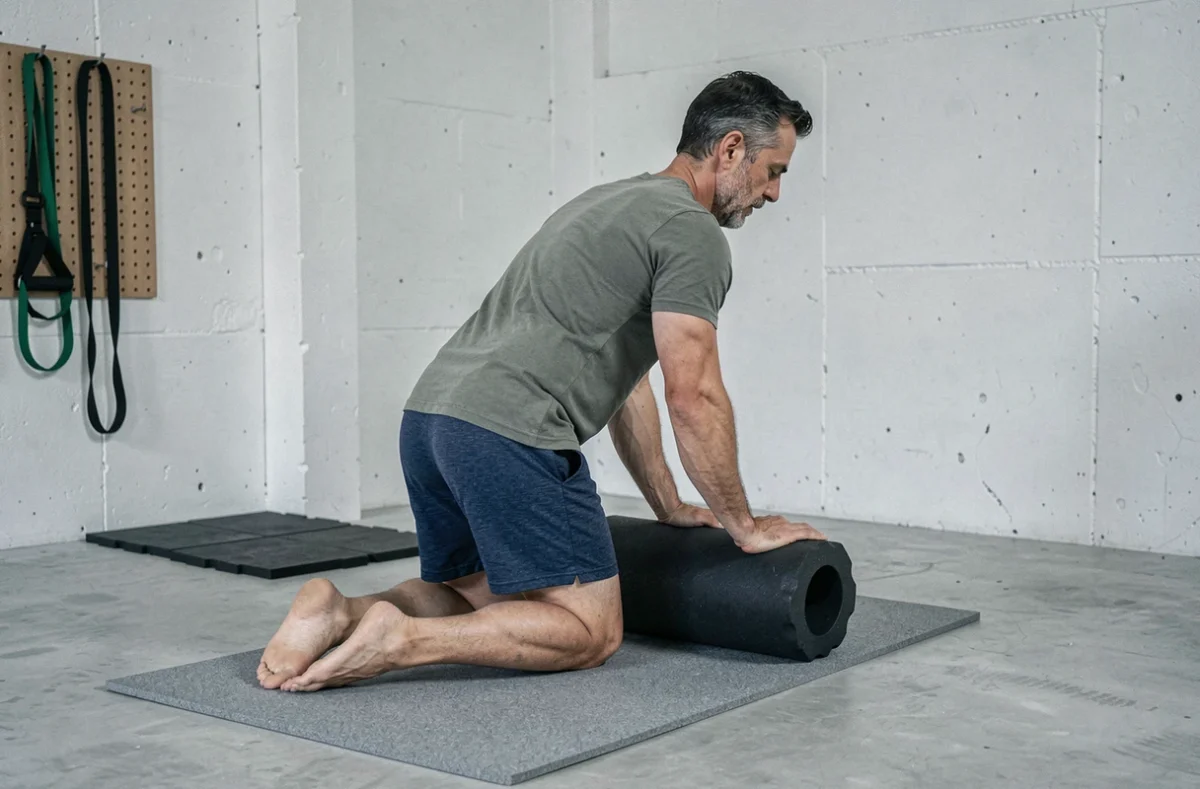
Air cushion and foam roller: two Pilates alternatives for very different needs
Rather than briefly listing eight accessories, let’s focus on two that clearly illustrate the difference in support between alternatives.
The air cushion (stability disc)
Inflatable and flat, it can be placed under your buttocks or one foot. It creates real instability, but confines it to a horizontal plane, limiting the risk of suddenly losing your balance. For seated core exercises, it engages the deep core muscles without requiring you to manage the height and rolling motion of a ball. It takes up very little space.
However, it doesn’t replace the ball for back extension stretches. Its surface is too small to lie back on. Its use is limited to balance and postural strengthening.
The foam roller
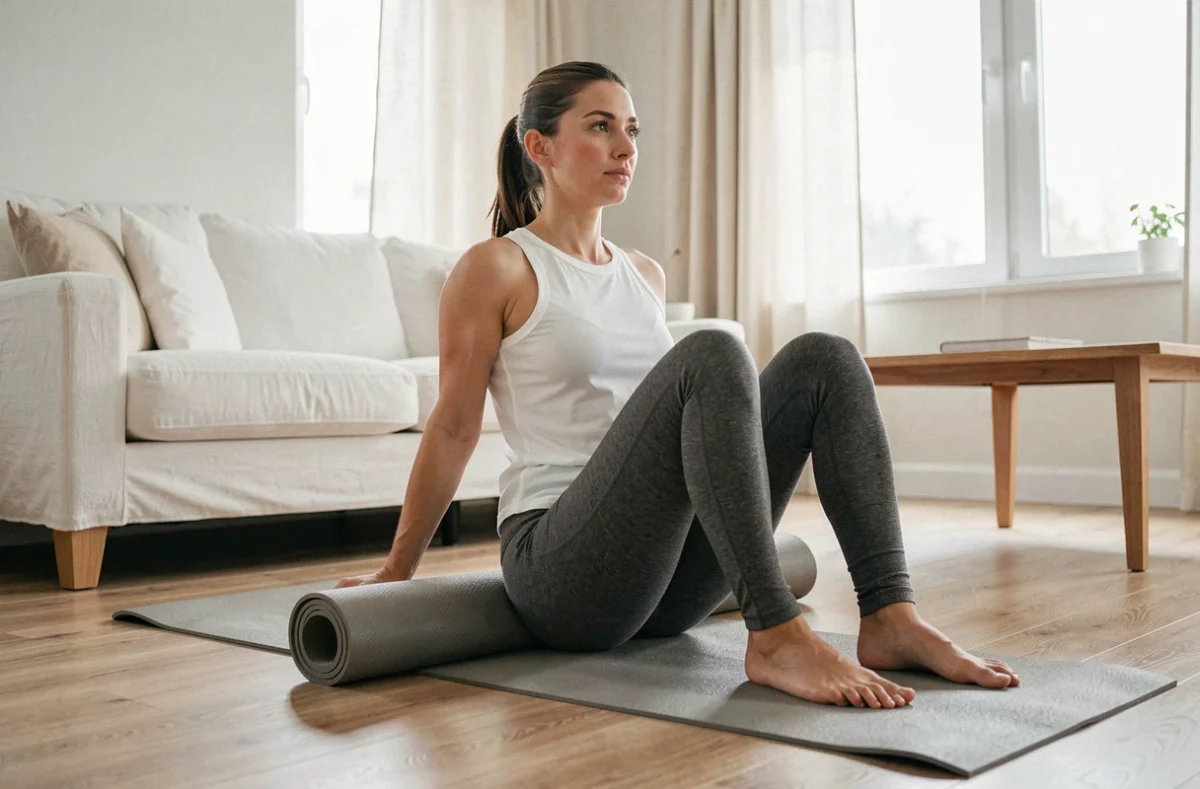
The roller provides stable, linear support beneath the spine, making it a suitable tool for stretching and spinal mobility. Lying on it lengthwise, you can work on opening the chest or releasing the paraspinal muscles while maintaining full control of your position.
For core training, the roller provides less proprioceptive stimulation than a ball. There is some instability (the cylinder can roll), but it’s limited to one direction. This is useful for people in rehabilitation: moderate instability allows them to progress gradually before moving on to a more challenging tool.
Resistance bands and floor exercises: alternatives without instability
Not every function of the ball requires an unstable surface. You can strengthen your legs, arms, or core with a resistance band, which adds progressive resistance without requiring any balance.
One thing to note: some resistance bands contain latex. Latex-free versions are available for people with allergies and offer comparable resistance. This practical detail can have a greater impact on your choice of product than you might think.
Mat Pilates exercises (without any equipment) are also a valid alternative. You can practice mat Pilates without a ball or any equipment, and classic core exercises (the hundred, plank, swimming) engage the deep muscles in a comparable way. You don’t need to add an accessory to make progress.
Household items: a temporary fix, not a system
Several sources mention using household items such as a rolled-up towel, a firm pillow, or a water bottle. These substitutes work for occasional exercises, but they have some practical limitations:
- A pillow offers no calibrated resistance. Its instability varies from one model to another, making progress difficult to measure.
- A rolled-up towel can slip on some floors, adding risk without providing any real muscular benefit.
- A water bottle can replace a weighted ball for arm exercises, but its diameter and weight aren’t designed for prolonged use.
These solutions are suitable for trying out a movement or as a stopgap when traveling. They’re not a long-term replacement for dedicated equipment, especially if your goal is regular proprioception training or progressive strengthening.
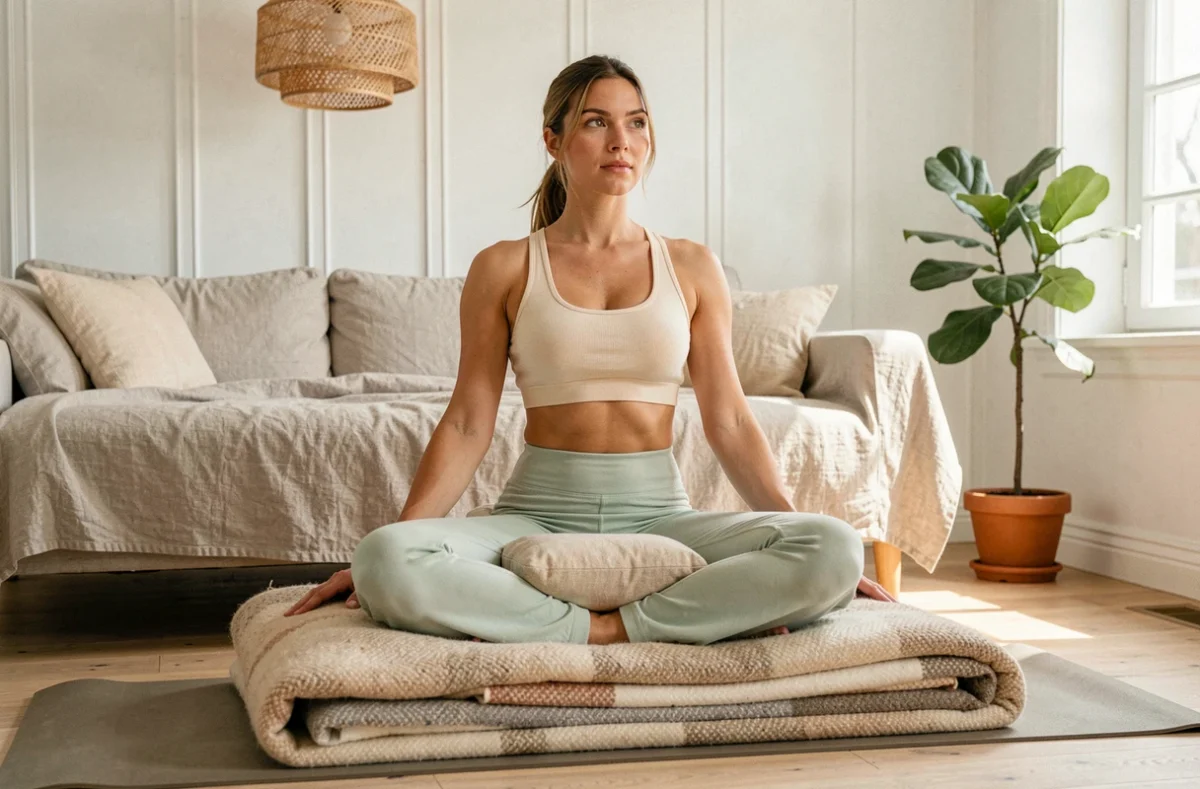
Choosing a Pilates ball alternative to suit your needs
The table below combines the two criteria (primary function and level of support) to help you choose an option that suits your needs.
| Profile | Primary function | Recommended alternative | Stability level |
|---|---|---|---|
| Beginner or senior | Postural core training | Air cushion | Moderate instability |
| Returning after an injury | Back stretches | Foam roller | Stable support |
| Regular exerciser | Strength training | Resistance band | No instability |
| Advanced exerciser | Overall proprioception | Balance board | High instability |
An advanced exerciser looking to replace the ball’s balance component will find a comparable or even greater challenge in a balance board. But for someone returning to exercise, starting with a foam roller and then moving on to an air cushion is a logical progression that limits the risk of compensating with poor posture.
Available research does not show that unstable equipment is consistently superior to equivalent exercises performed on the floor. When choosing an alternative to a Pilates ball, it’s better to consider comfort, consistency, and your body’s actual ability to manage the level of instability involved than to look for an identical substitute.