Business travel is an inevitable component of many professionals’ lives. Between flights, train journeys, or hours spent driving, time can sometimes seem to stretch indefinitely, testing productivity and efficiency. Optimizing these moments becomes essential to make the most of every minute. This involves strategic planning, wise use of technological tools, and effective remote work management. There are tips to transform these often-perceived lost time slots into fruitful work opportunities or even necessary relaxation to maintain a vital balance.
Strategies for Optimizing Business Travel
Managing business travel involves a precise alchemy: combining speed and efficiency without neglecting safety and comfort. André Bozec, a civil engineering expert, recommends sharp methods for optimizing travel. Dividing the activity territory into targeted geographical sectors can significantly reduce unnecessary trips. This intelligent sectorization, combined with colleague support, promotes the pooling of resources and means of transport, thus limiting redundant travel.
The digital age offers a range of solutions for travel management. A GPS application, much more than just a navigation tool, becomes the essential road assistant to anticipate traffic conditions and develop the most efficient route. Using public transport, when possible, places travel within a framework of sustainable development and cost rationalization. On roadways, the toll badge ensures a smooth passage at toll barriers, eliminating unnecessary stops and time losses.
Preventing unnecessary travel is part of this quest for rationalization. Current communication technologies allow for replacing certain physical meetings with video conferences, an effective legacy of the COVID-19 era that continues to prove its usefulness. However, reducing in-person meetings should not erode the quality of professional exchanges, hence the importance of reliable technical devices and meticulous preparation.
IntraParis boasts a notable innovation: optimizing travel in the heart of the City of Light. By combining real-time data on traffic density, ongoing works, and exceptional events, IntraParis offers dynamic routes tailored to each moment for professionals. This approach to business travel routes in urban environments, blending responsiveness and foresight, provides a range of solutions for navigating the metropolis with ease.
Maximizing Efficiency During Travel
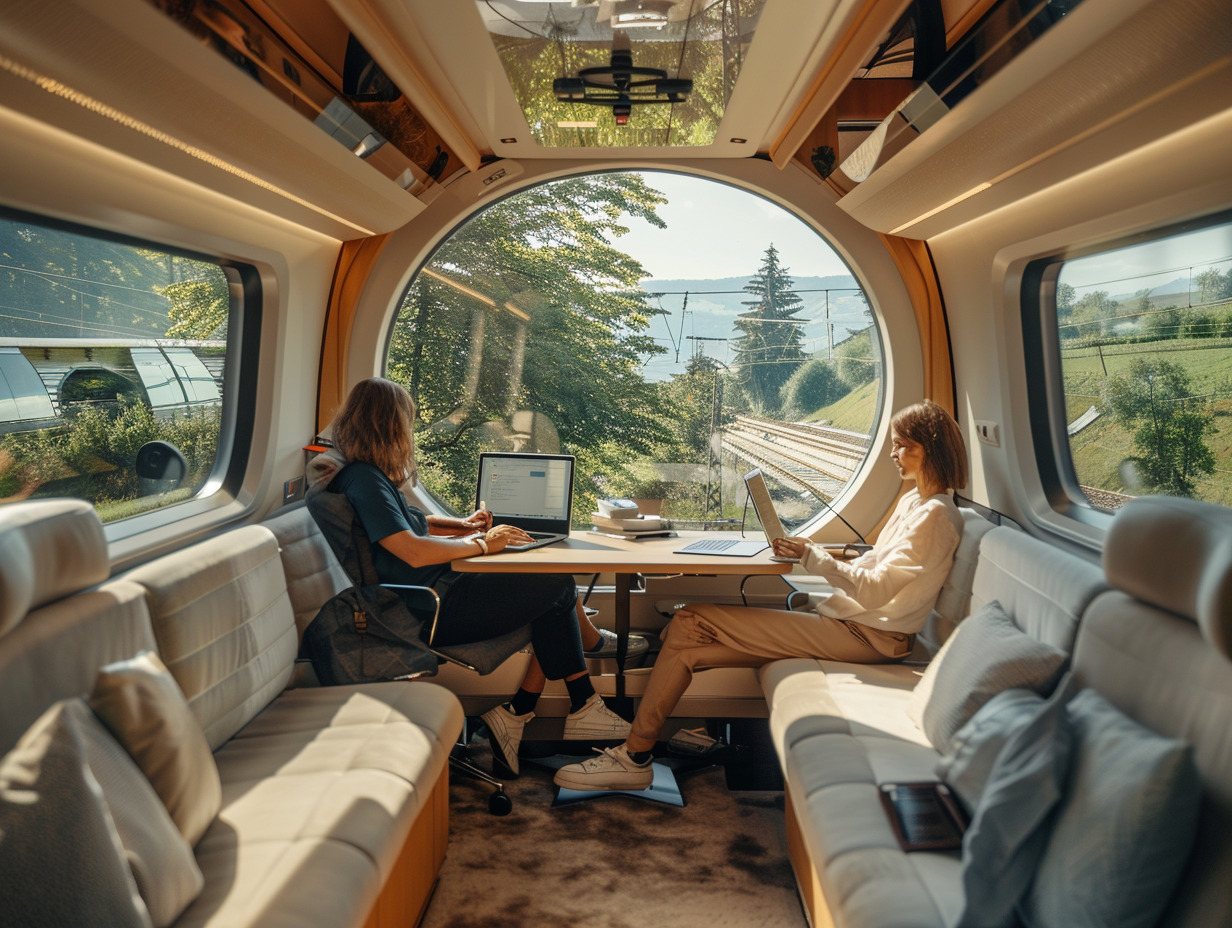
In the context of business travel, time management presents itself as a major challenge. The time spent on the road or in public transport can be transformed into effective work time. To achieve this, preparing a list of tasks that can be done remotely, such as note management or reviewing files, proves to be an effective strategy. The goal? To make the journey not a passive interlude, but a constructive travel time.
Aware of uncertainties, such as unexpected events or traffic conditions, professionals must equip themselves with unwavering flexibility. Adequate preparation using real-time forecasting tools and having a change of clothes in the vehicle can effectively address setbacks. Caution also dictates attentive driving, anticipating risks related to weather or other external factors.
Adopting an educational perspective during travel aligns with a logic of valuing time. Resources such as the podcast ‘Productif au Quotidien’ can prove to be significant allies for self-training. Staying informed, learning, and finding inspiration: all practices that transform travel time into an opportunity for personal and professional enrichment.
Reinventing the journey between home and the usual workplace involves questioning the relevance of travel. Remote work and video conferencing, legacies of the COVID-19 era, stand as viable alternatives, not only to reduce the frequency of travel but also to optimize business travel time management. These strategic choices, far from being mere temporary measures, are now integrated into the foundation of contemporary professional practices.