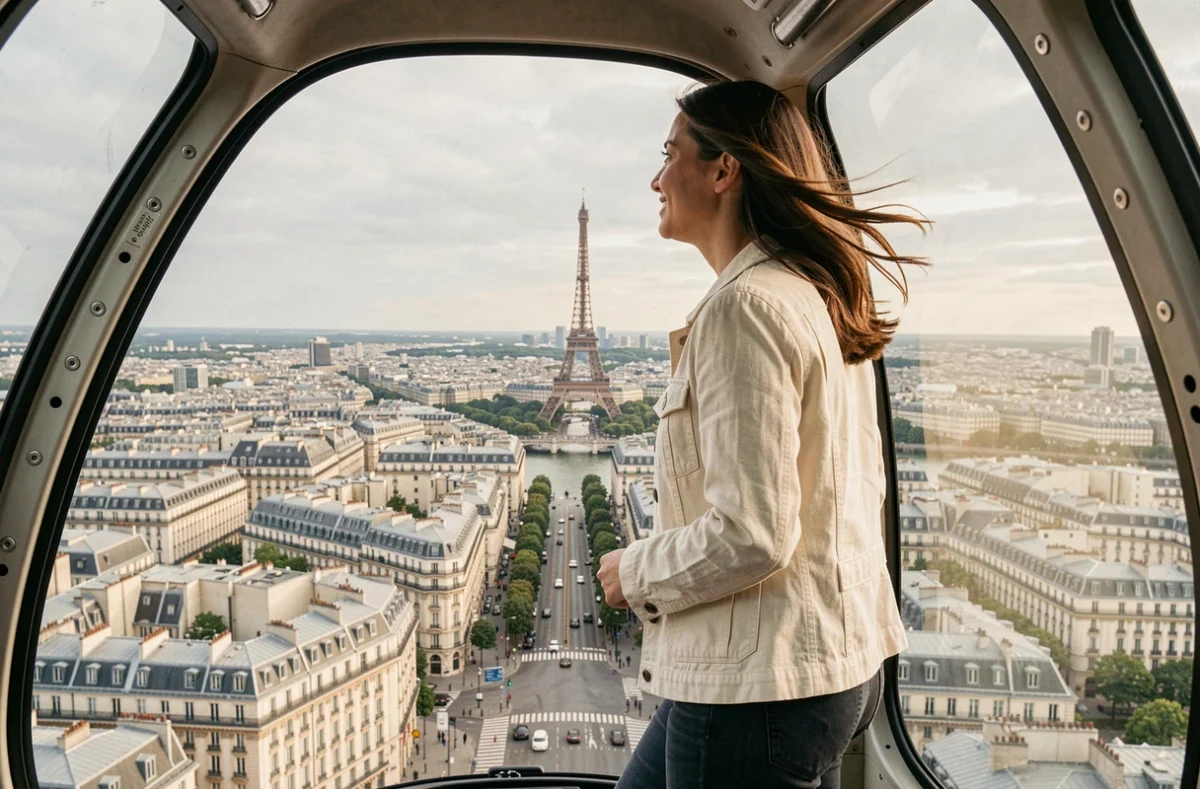
Paris has around ten public observation points at height, along with aerial experiences such as the tethered balloon at Parc André-Citroën, which rises to 150 metres. From towers and rooftop terraces to flights, there are plenty of ways to see the capital from above. Their appeal varies depending on the season, the day’s weather and visitors’ fitness levels.
Weather, physical effort and accessibility: the real criteria for choosing a Paris viewpoint
Most guides rank Paris viewpoints by how beautiful the panorama is. This overlooks three factors that often determine the quality of the experience: weather conditions, the physical effort required and accessibility for people with reduced mobility.
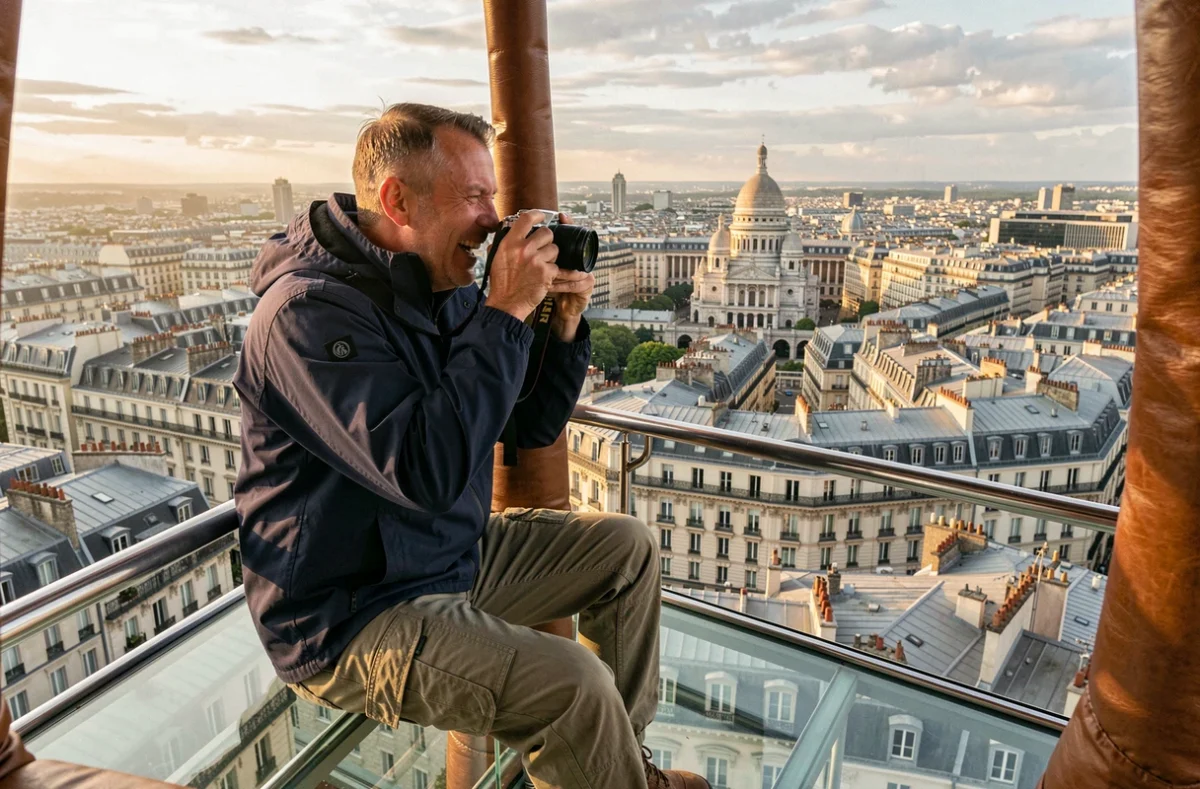
The balloon at Parc André-Citroën is a good example. Its tethered ascent offers a 360-degree panorama, but adverse conditions (wind, rain or thunderstorms) can lead to closure without notice. Checking whether it is open on the day of your visit can save you a wasted trip. Details of the full range of options are available at https://www.parisvudavion.com, which lists sightseeing flights and aerial observation experiences over the capital.
At the other end of the spectrum, climbing the towers of Notre-Dame involves taking the stairs, with no elevator. For a family with young children or someone with mobility difficulties, this is not a suitable option, whatever the promised panorama.
Three criteria make it easy to narrow down the options before booking:
- Weather dependence: tethered balloons and open rooftop terraces are most vulnerable to cancellations. The windows of an enclosed observation deck ensure you can visit even on overcast days.
- Physical effort: some sites can only be reached by stairs (Notre-Dame and certain sections of medieval towers). Others have high-speed elevators that take you straight to the top.
- Accessibility for people with reduced mobility: observation decks with spacious elevators and level platforms are still rare. The Eiffel Tower’s second floor is accessible by elevator, making it one of the few viewpoints suitable for wheelchair users.
Seeing Paris by plane or helicopter: what the regulations actually allow
Seeing Paris from an aircraft is the most spectacular experience, but also the most tightly regulated. Paris airspace is divided into strictly restricted zones. Tourist helicopter and light aircraft flights generally depart from airfields on the outskirts and follow specific corridors that do not fly directly over the historic centre at low altitude.
Introductory flights offered by licensed operators last between around 15 minutes and half an hour. The route often includes a stretch along the Seine, with views of the Eiffel Tower, Sacré-Cœur and La Défense. Visibility depends entirely on cloud cover: a flight in clear skies at dawn or late in the day produces photographs that are incomparable to those taken during a hazy midday slot.
One point to clarify: recreational drones are not a legal alternative for filming Paris from the sky. French rules generally prohibit flights in the open category over public spaces in built-up areas. Restricted zones and any possible exceptions should be checked with official sources before attempting a flight. Fines and equipment confiscation are real risks, not just theoretical ones.
Montparnasse Tower closed in 2026: effortless alternatives for an urban panorama
Montparnasse Tower, long considered the best viewpoint in Paris because it offered a panorama that included the Eiffel Tower, is not an option for a visit in 2026. Renovation work is limiting or suspending access to the terrace. As the situation may change, checking the official website before setting out is the only reliable precaution.
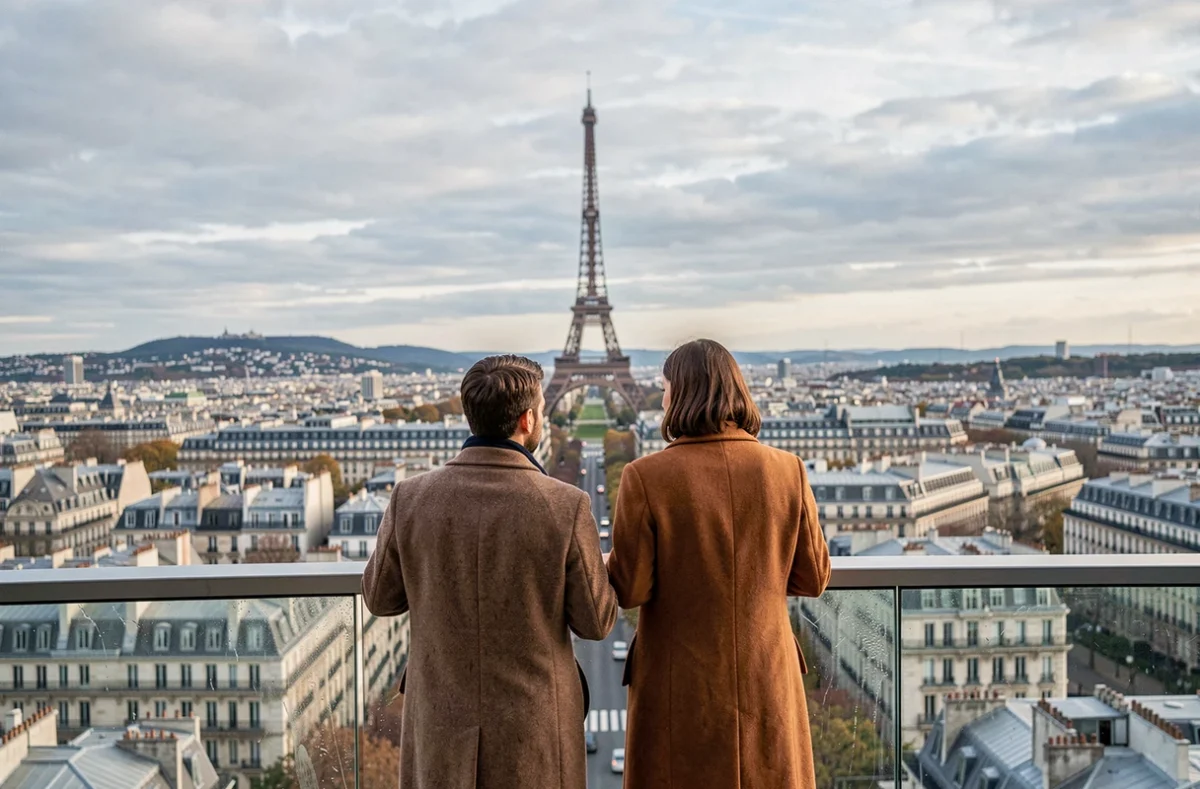
This closure makes it worth considering some lesser-known alternatives. Sacré-Cœur, freely accessible from the forecourt, offers a sweeping view over the rooftops of northern Paris. Climbing to the dome (for a fee) gives you a higher vantage point, but involves a narrow staircase.
Paris department stores have rooftop terraces open to the public, often free of charge. These spaces offer unobstructed views of nearby landmarks without a reservation or any particular physical effort. The rooftop of Galeries Lafayette overlooks the Opéra Garnier and the Paris skyline, with elevator access.
For visitors who value comfort, panoramic restaurants on the upper floors of some hotels offer a view alongside a meal. They cost more, but combine the scenery with comfort and no physical demands.
Photographing Paris from above: the times and conditions that make all the difference
The quality of an aerial photo of Paris depends less on the equipment than on the timing. Professional photographers favour two time slots: the hour after sunrise and the hour before sunset. The low-angle light lengthens the shadows cast by landmarks and adds depth to the skyline.
A partly cloudy sky often makes for better photos than a uniform blue one, as clouds add texture and contrast. Summer haze, on the other hand, which is common between June and August around midday, reduces visibility and flattens colours.
From a tethered balloon or a plane, whether there is a window—or no window at all—makes a dramatic difference to the result. The balloon at Parc André-Citroën is open to the outside, eliminating unwanted reflections. In a light aircraft with windows, press the lens against the glass to reduce optical artefacts.
Paris from above is more than a checklist of panoramas. Choosing the viewpoint, time of day and way of getting there can turn a simple view into an experience worth the trip—or an expensive disappointment. Checking the weather, site accessibility and any closures on the day remains the most useful thing to do before looking up at the capital.