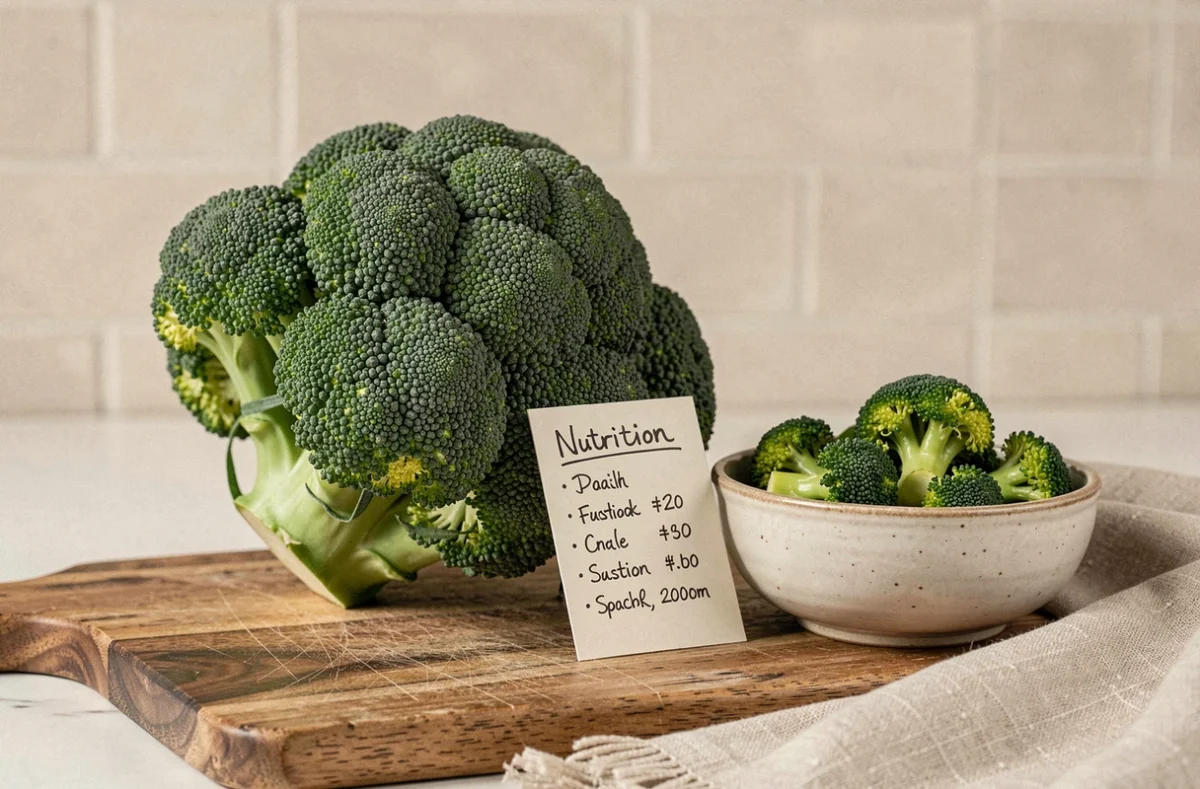
Broccoli regularly comes up in discussions about plant-based diets rich in protein. With a modest yet real protein content, this cruciferous vegetable often raises expectations that can be disproportionate. The available nutritional data allows for a precise understanding of what this vegetable provides, and especially what it cannot replace.
Broccoli Protein: A Complete Profile but Limited in Sulfur Amino Acids
Broccoli contains all the important amino acids. This sets it apart from many other vegetables. However, sulfur amino acids like methionine and cysteine remain in limited proportions. This characteristic hinders its ability to meet high protein needs on its own, particularly for athletes or individuals in recovery.
The protein content per serving remains low compared to legumes, eggs, or dairy products. When adjusted for the weight consumed in a meal, broccoli does not compete with these denser sources. Pairing it with whole grains or legumes helps to complete the amino acid spectrum, as several analyses published by The Workout Mag remind us.
A common pitfall is comparing the protein in broccoli to that in meat by equal weight without considering the actual volume consumed. No one eats several hundred grams of cooked broccoli in a single serving, whereas a standard serving of meat already covers a significant portion of daily needs. For practical information on Conseils Cuisine, the issue of the protein/volume ratio is addressed concretely.

Cooking Broccoli and Protein Concentration: What Water Changes
Cooking does not create additional proteins. It is the loss of water that concentrates the nutrients per weighed portion. Cooked broccoli appears richer in protein than raw broccoli simply because its weight has decreased due to evaporation.
Prolonged boiling leads to the leaching of water-soluble compounds into the cooking water, with vitamins being the most affected. Proteins, on the other hand, are more heat-resistant. Short steaming preserves both the texture, micronutrients, and the enzymatic activity related to the formation of sulforaphane.
Sulforaphane and Myrosinase: A Fragile Duo
Sulforaphane, the key compound in broccoli, forms when myrosinase comes into contact with glucoraphanin after cutting or chewing. Intense cooking inactivates myrosinase and blocks this conversion. Gentle steaming or raw consumption remains the most favorable methods.
The available data does not allow for a precise temperature threshold beyond which the enzyme is completely destroyed. Field reports vary on this point, as the variety of broccoli, its freshness, and the exact cooking time influence the outcome. Cutting the broccoli and then waiting a few minutes before cooking may allow the enzymatic reaction to start before exposure to heat.
Nutritional Density of Broccoli Beyond Proteins
Reducing broccoli to its protein content overlooks its main asset: a high nutritional density for a very low caloric intake. Vitamin C, vitamin K, vitamin B9, fiber, and beta-carotene make up a profile that few vegetables can simultaneously offer.
- Vitamin C is present in significantly higher amounts in raw broccoli than in cooked, with a ratio of about three to one according to Ciqual data.
- Vitamin B9 (folates) is particularly important for pregnant women and growing children for cell renewal.
- Glucosinolates, precursors of sulforaphane, are the subject of studies on the prevention of certain cancers, in conjunction with vitamin C and beta-carotene.
Frozen broccoli retains a large portion of these nutrients. Freezing occurs quickly after harvest, which limits the degradation of vitamins sensitive to oxidation.
Protein Complementarity: What to Pair with Broccoli
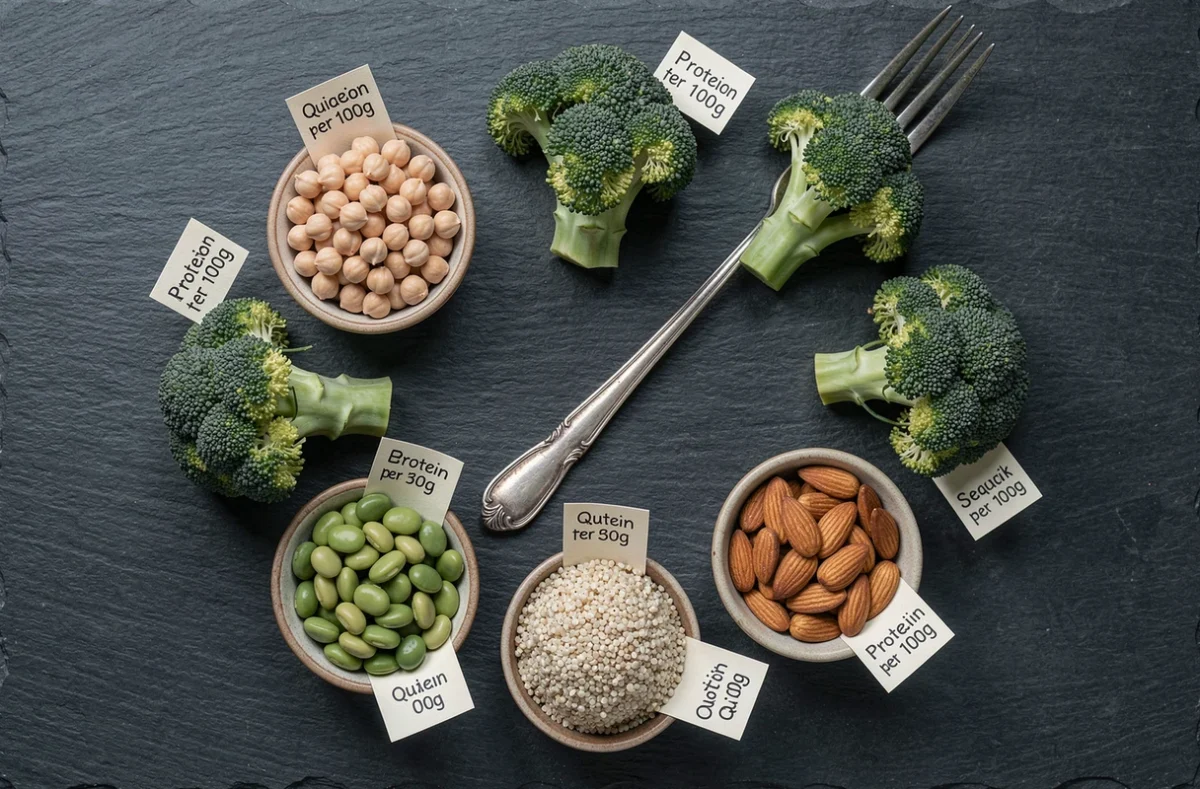
In a plant-based or flexitarian diet, broccoli serves as a complement, not a protein pillar. Its value is revealed when combined with other foods that compensate for its limitations in methionine and cysteine.
- Lentils or chickpeas: rich in protein and lysine, they complement broccoli’s profile in a single dish.
- Quinoa or brown rice: grains provide the sulfur amino acids that are deficient in broccoli.
- Eggs or cheese: for non-strictly vegan diets, these animal sources offer a complete protein profile that adds to the micronutrients in broccoli.
Broccoli does not replace a dense protein source in a balanced meal. It enriches the plate with fiber, vitamins, and bioactive compounds that animal proteins or legumes alone do not provide.
Limits of Health Claims Surrounding Broccoli
Studies on sulforaphane and cancer prevention are mostly conducted in vitro or on animal models. Clinical data in humans do not allow for a direct protective effect to be concluded at this stage. Attributing therapeutic virtues to broccoli exceeds what current scientific literature supports.
Individuals on anticoagulant treatment should monitor their broccoli consumption due to its vitamin K content, which interferes with certain medications. This point, often absent from general articles, deserves to be highlighted for anyone consuming this vegetable in large quantities.
Broccoli remains a vegetable to regularly incorporate into the diet for its richness in micronutrients and fiber. In terms of protein, it provides a real but insufficient contribution on its own. Pairing it with complementary sources in each meal remains the most nutritionally coherent strategy.