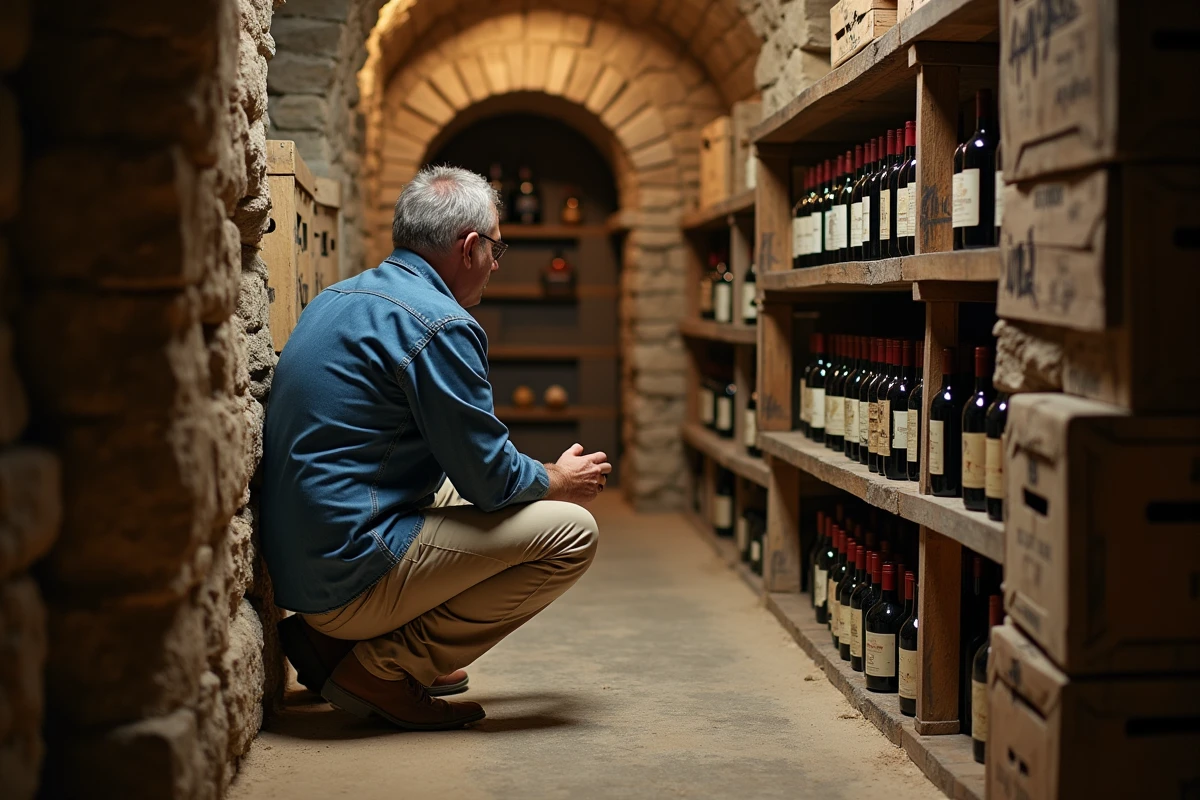
The French regulations do not systematically classify the cellar and the basement in the same category, despite their common location below ground level. Some co-ownerships prohibit the development of cellars, while a basement can sometimes be transformed into a living space under strict conditions. These differences do not always appear in real estate listings, which perpetuates confusion. The nature of access, ceiling height, and the presence of technical equipment play a key role in the qualification of these spaces. This legal and functional status directly impacts their use, value, and development possibilities.
Cellar and basement: what are the concrete differences in real estate?
In the real estate sector, the difference between cellar and basement is never just a matter of vocabulary. They are two spaces with different natures and uses. The cellar remains confined underground, raw, with low ceilings, barely ventilated, reserved for pure storage: boxes, old items, dusty bottles… Nothing makes it habitable, and the Carrez Law clearly excludes it from the calculation of living space. This is what distinguishes it from the basement right from the start.
Transforming a basement into a living space? Nothing is impossible if the room exceeds 1.80 meters in ceiling height, has openings, and secure access. Here, the basement takes on a new dimension: guest room, workshop, playroom, or workspace, everything becomes possible once the agreement from the urban planning department is obtained. A well-thought-out basement significantly enhances the property’s value on the market, while a cellar remains a storage area at the back of the plot.
Before embarking on a purchase or renovation, sometimes all it takes is a careful look: terrain configuration, technical networks, quality of construction… These criteria make the difference between a simple storage room and a potential living space. Professionals are not mistaken: this classification influences taxation, possible uses, and, in the future, resale.
Particularities, advantages, and limitations of each storage space
At first glance, any space under a house could be seen as a useful extension. However, the cellar has certain disadvantages: regular humidity, often absent ventilation, and reduced light. It is impossible to imagine installing anything other than a wine cellar or a few worthless items; the configuration, with a ceiling height of less than 1.80 meters, keeps it far from any residential use.
The basement offers something entirely different. Well-ventilated, bathed in a bit of light, and with sufficient height: it can open up to many possibilities, a workshop, a basement garage, or even a recreation room. As long as it meets building standards and energy regulations (PEB), the space can be considered a real asset for the house.
To clarify before any project, here’s a quick comparison of these two spaces:
- The cellar: use only for storage, impractical access, sensitive to humidity.
- The basement: potential for development, proper ventilation, direct connection with the rest of the home.
Analyzing humidity, ventilation history, and the intended function of the building allows for judging whether the space deserves renovation rather than being forgotten in darkness.

Choosing wisely and developing according to your needs: practical tips to enhance these spaces
To effectively transform a buried space, one must first consider what it truly allows. A low ceiling confines the cellar to its function of storage or wine cellar. An adaptable basement, on the other hand, opens the door to a real office, a playroom, a workshop, or a home theater.
Determining elements for development
Some concrete parameters tip the balance of a successful development project:
- Light and ventilation: taking care of ventilation (natural or mechanical) avoids many inconveniences related to humidity. A properly ventilated basement area remains usable and healthy throughout the seasons.
- Wastewater drainage: consider the connection, especially if you plan a bathroom or laundry room. If the level is too low compared to the network, a lifting pump will be necessary.
- Thermal comfort: enhancing the insulation of walls and ceilings changes everything. A well-protected basement against heat loss remains pleasant, regardless of the function assigned to the space.
In cities where living space is expensive, basement development becomes an obvious choice to expand, enhance, and invent new uses for the home. Before any transformation, it is better to check what the Carrez Law states: precise calculation of the area is necessary to comply with regulations. Sometimes, all it takes is a single glance under the floor to uncover an unused space to transform, in order to give your home all its value, and perhaps even more.